
Paytable breakdown
Gates of Hades Symbols & Paytable
How symbols, clusters, and multipliers combine to pay out on the 6x6 grid.
Open the slot at partner casino- Return to player
- 96.52%
- Max payout
- 10000x
- Lines
- Cluster Pays
- Number of reels
- 6x6 grid
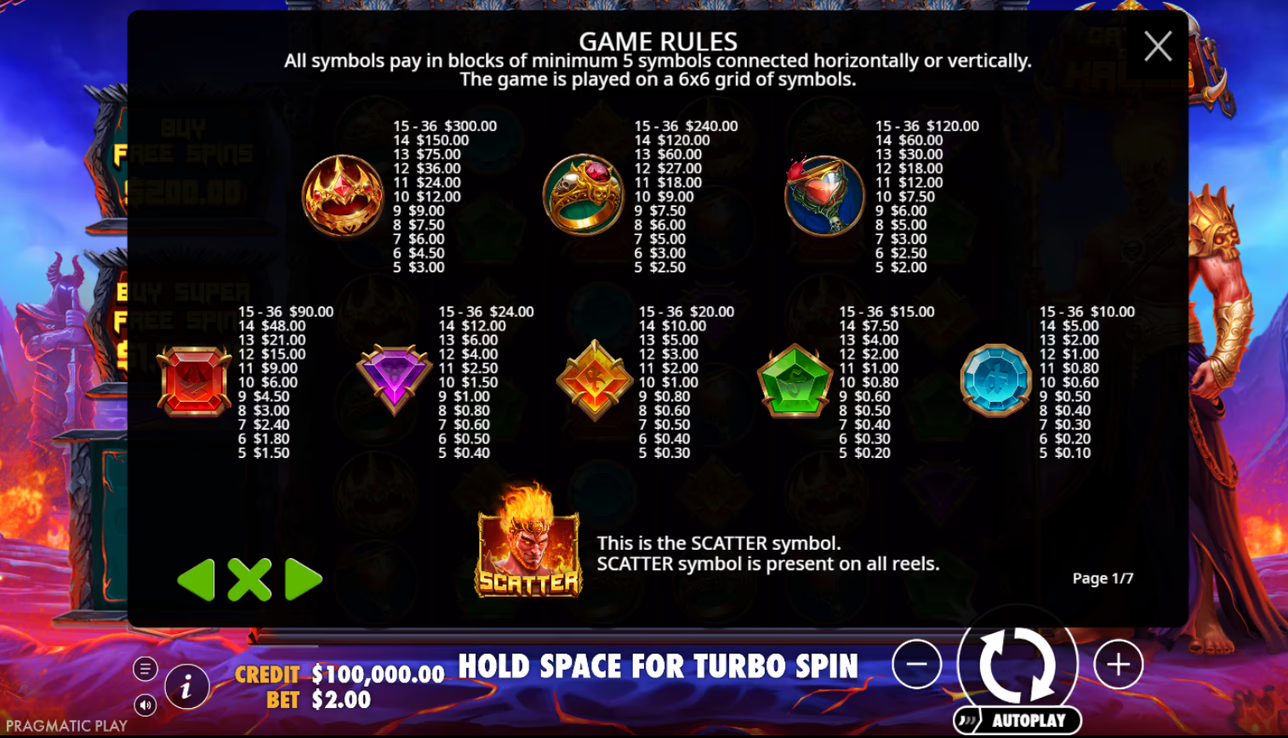
There are no paylines. Wins form when five or more matching symbols touch horizontally or vertically anywhere on the 6x6 grid, and the highest payouts come from stacking large clusters or catching multiplier wilds during a tumble sequence.
- Low symbols are coloured gems; premiums include Cerberus, Hades, and themed relic icons
- Payouts scale with cluster size, with the biggest jump at 15+ connected symbols
- Wild multiplier symbols, not base symbols, drive the largest single-spin results
Reading the cluster paytable
Gates of Hades abandons the line-based paytable format entirely. Instead of checking a payline diagram, players read the paytable as a cluster chart: each symbol lists a payout range tied to how many connected copies land in a single group, with the scale climbing sharply once a cluster passes the mid-tier size threshold and continues upward toward the 15+ bracket.
The gem symbols occupy the lower rungs of the paytable, as is standard for this style of grid slot. They fill the screen often and keep the tumble sequence alive, but their payouts stay modest even in large clusters. The premium tier — Cerberus, Hades, and the remaining themed icons — carries the bulk of the standard-symbol value, though the exact per-symbol figures are not consistently published across the sources reviewed for this page.
What separates this paytable from a typical cluster slot is the wild's role. The wild does not just substitute; it carries its own multiplier value, ranging up to roughly 100x in the base game and as high as 500x during free spins. That multiplier collects above the reel and applies to cluster wins generated during that tumble run, meaning a single sequence can be worth far more than the base symbol payout alone suggests.
Because payouts depend on cluster size and multiplier presence together, the printed paytable numbers only tell part of the story. A five-symbol cluster with no wild multiplier nearby behaves very differently from the same cluster occurring while a collected multiplier is active above the grid.
The scatter symbol sits outside this cluster-pay structure altogether. It does not form clusters and does not contribute to line or group payouts — its only function is counting toward the free spins trigger, which is covered separately from the standard paytable.
Paytable terms explained
Cluster pay
A win formed by five or more matching symbols connected horizontally or vertically, rather than along a fixed payline.
Tumble
The process where winning symbols disappear and new ones fall in to fill the gaps, potentially triggering further wins in the same spin.
Wild multiplier
A special symbol that substitutes for regular symbols and carries a numeric multiplier applied to clusters formed during that tumble.
Collected multiplier
The running total of wild multiplier values gathered above the reel during a tumble sequence or free spins round.
Scatter trigger
Landing three or more scatter symbols, which activates the free spins feature separately from cluster payouts.
What shapes the paytable outcome
- 6x6 grid resolving through cluster pays instead of paylines
- Tumbling wins that can chain multiple payouts from a single spin
- Wild multiplier symbols worth up to 100x in the base game
- Free spins wilds reaching multipliers as high as 500x
- Persistent multiplier collection above the reel across a bonus round
- Scatter symbol reserved for triggering free spins, not for cluster wins
How a paytable win resolves on screen
Symbols land across the 6x6 grid after the spin settles
The game checks for groups of five or more matching symbols touching horizontally or vertically
Winning symbols clear, any wild multipliers present are added to the collected total, and the payout is applied
Remaining symbols tumble down and new ones fill the gaps, repeating the check for additional wins
Paytable strengths and drawbacks
- Cluster format lets a single spin cascade through several payouts
- High volatility means long stretches without a meaningful cluster win
- Wild multiplier mechanic can turn a modest cluster into a substantial win
- Exact per-symbol payout values are not consistently documented across sources, making bankroll expectations harder to gauge from the paytable alone
- Free spins multipliers persist and stack, rewarding longer bonus rounds
Paytable questions
Do I need a minimum number of matching symbols to win?
Yes, a cluster needs at least five matching symbols connected horizontally or vertically; smaller groups do not pay.
Does the wild symbol have its own payout, or only a multiplier?
The wild's main role is carrying a multiplier applied to nearby cluster wins during a tumble; it substitutes for regular symbols to help form clusters rather than paying a fixed line value.
Can the scatter symbol be part of a paying cluster?
No, the scatter only counts toward triggering free spins and does not form or contribute to cluster wins.
Why do some clusters pay much more than others of similar size?
Payout size depends on both the cluster's symbol count and whether a collected wild multiplier is active above the reel during that tumble sequence.
Does the paytable change during free spins?
The underlying cluster rules stay the same, but wild multipliers can reach a much higher range during free spins, which increases the effective value of clusters formed in the bonus.
What happens to the collected multiplier between tumbles?
It stays above the reel and keeps building through the tumble sequence, applying to each subsequent cluster win until the sequence ends.
Are premium symbol payouts fixed values shown per symbol?
Review sources agree the paytable is cluster-scaled per symbol, but the precise per-tier numbers for each premium icon are not consistently published, so treat the printed in-game table as the reference rather than third-party summaries.